After surgery, patients should avoid strong sunlight, especially initially. It is therefore recommended to avoid LASER in July and August. Under controlled conditions where sunlight exposure is minimized, this is not an absolute contraindication.

Refractive surgery encompasses all surgical techniques and procedures that help correct refractive errors such as myopia, hyperopia, and astigmatism.
The use of the excimer laser (Myopia Laser) has been studied and applied since 1985. The continuously evolving clinical experience and expertise from its applications have elevated photorefractive surgery to the top of effectiveness for correcting refractive errors.
These innovative surgical procedures are characterized by absolute safety, reliable results, and numerous benefits for the patient, such as comfort and freedom of movement, improved quality of life, and independence from glasses and contact lenses.
Suitable candidates for refractive surgical procedures are:
Some factors may prevent the application of refractive surgery in certain patients. These include:
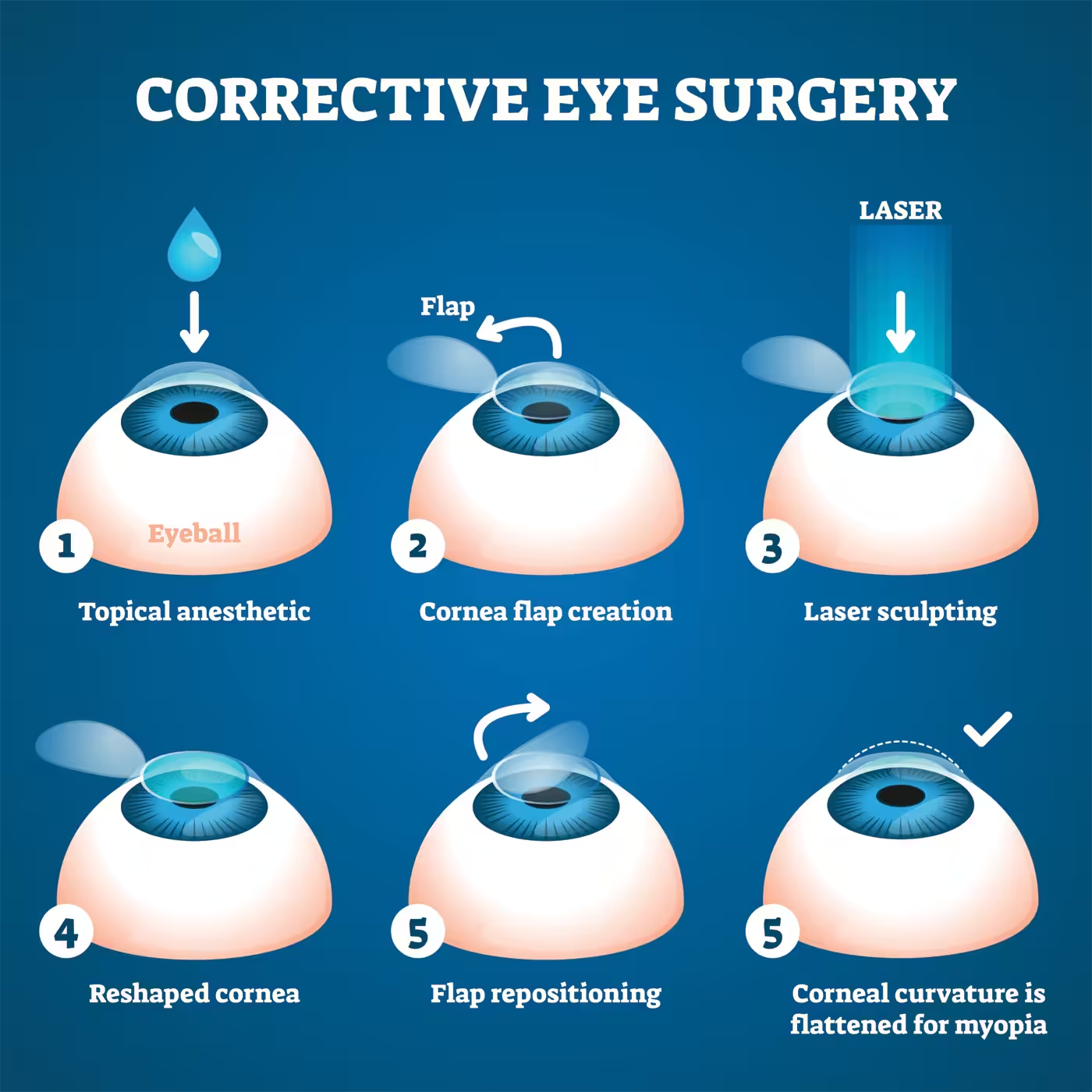
The two most common techniques in refractive surgery are femtoLASIK (Femtosecond Laser-assisted In Situ Keratomileusis) and PRK (Photorefractive Keratectomy). Both techniques use the SAME excimer laser to sculpt and reshape the corneal surface.
The main advantage of femtoLASIK is immediate vision restoration and rapid recovery with minimal discomfort. Patients can return to daily activities within a few days.
PRK and transPRK require a longer recovery period. Patients may experience mild photophobia and foreign body sensation during the first 24 hours, and vision reaches the desired level in 2–3 weeks.
Both techniques require a thorough preoperative evaluation. Patients must stop using contact lenses for 2 weeks before the examination.
On the day of surgery, patients should:
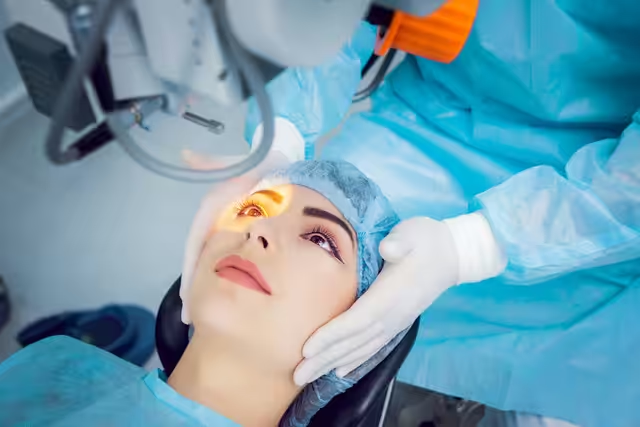
Upon arrival, nursing staff will repeat some examinations and prepare the eyes with anesthetic drops. Surgical clothing is provided, and the patient is escorted to the operating room.
A mild sedative may also be given to reduce anxiety.
You are a suitable candidate for LASER if:
You are 19 years or older and your prescription has been stable in recent measurements by your ophthalmologist.
You do not have glaucoma, cataract, keratoconus, or other known eye conditions.
You have not had viral keratitis (e.g., herpes simplex) in the past.
You have no corneal scars (e.g., old injuries).
You have no unregulated systemic diseases such as diabetes or hypertension.
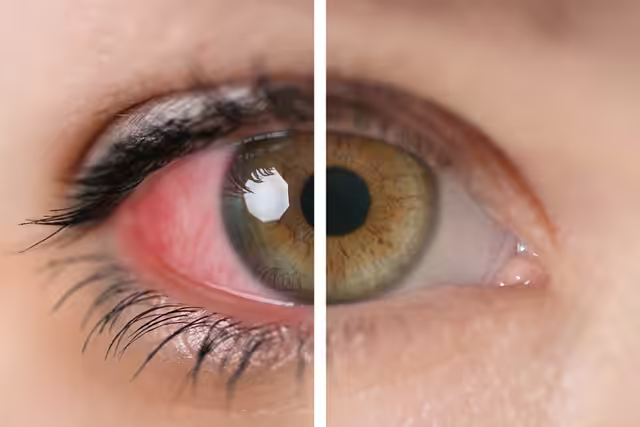
You have no active eye inflammation such as conjunctivitis or anterior uveitis.
Candidates must first undergo a detailed refraction measurement (prescription) and a general eye exam. Cycloplegic drops are used, which temporarily blur vision for about 10 hours.
The next step is a preoperative corneal topography. This provides essential information about corneal curvature, thickness, and assist us in understanding if the eye meets all requirements for a safe procedure.
Corneal pachymetry is also performed, providing crucial data for selecting the most appropriate technique (LASIK, PRK, etc.).
PRK is the less invasive and non-flap procedure, which is its main advantage.
The cornea remains intact, and correction of myopia, hyperopia or astigmatism is achieved without creating a flap.
The main disadvantage compared to LASIK is mild discomfort and photophobia for the first 24–48 hours due to slower healing by comparison, which delays final vision restoration.
Yet, patients who select this method are fully functional within 7–10 days.
In LASIK, vision recovery is faster. The refractive error is corrected by sculpting the cornea beneath a flap.
This method is more invasive, and theoretically, complications are statistically more frequent.
Shortly before the procedure, after the preoperative exam (if done the same day), preparation begins. A mild sedative may be given to reduce anxiety and ensure smooth cooperation with the surgeon.
The main anesthesia is topical (eye drops), and the patient does not feel discomfort or pain.
Duration depends on whether PRK or LASIK is performed.
PRK lasts 5–60 seconds, depending on the correction required, not including preparation and antisepsis.
The LASIK technique takes an additional 6–7 minutes. This is due to the need to create the flap by means of special equipment (femto laser or microkeratome). After creation of the flap, the remainder of the procedure is identical to PRK.
Studies of millions of surgeries performed globally show that complications are rare and can be further minimized with a thorough preoperative evaluation.
Serious potential complications include:
Infection:
Infections are extremely rare due to aseptic conditions during surgery and the administration of preventive antibiotic drops.
Haze:
Rarely, especially if postoperative care is interrupted, there may be corneal haze.
It is sually asymptomatic, does not affect vision, and resolves within a year.
This haze is related to the LASER thermal phenomenon and responds well to corticosteroid eye drops.
In the rare cases when it affects vision, haze can be treated with LASER.
Under- or over-correction:
Sometimes, undercorrection or overcorrection may occur. Under-correction can be addressed with additional laser treatment.
In the case of over-correction, this may be managed with topical treatment during recovery.
Immediately after surgery, vision may be blurred.
Patients may find bright light, screens, or sunlight uncomfortable (especially on particularly sunny days).
A sandy sensation in the eyes may occur. These effects usually last the first 24–48 hours.
Patients should be accompanied postoperatively.
Driving should be avoided until vision allows (typically 24–48 hours).
After surgery, patients should avoid strong sunlight, especially initially. It is therefore recommended to avoid LASER in July and August. Under controlled conditions where sunlight exposure is minimized, this is not an absolute contraindication.
Accurate diagnosis, effective management, and prevention of glaucoma using advanced technology and state-of-the-art equipment.
Performed using the phacoemulsification method — a procedure that lasts only a few minutes, offers rapid recovery, and delivers impressive results.
Surgical correction of refractive errors with new techniques that can permanently eliminate the need for glasses.
Monitoring and treatment of retinal and macular degeneration conditions using modern diagnostic and therapeutic methods.