

“Eyes that are red, that tear and hurt… if you give them care, they never forget you…”
Conjunctivitis is an inflammation of the conjunctiva, the thin mucous membrane that covers the inner surface of the eyelids and the anterior surface of the sclera (the white part of the eye). It is a very common condition and, in most cases, is not serious.
Causes of Conjunctivitis
Conjunctivitis can be caused by viruses (viral conjunctivitis), bacteria (bacterial conjunctivitis), or Allergens (allergic conjunctivitis). It is also frequently seen in patients who use contact lenses, are exposed to smoke, exhaust, dust, swimming pool water, or use eye drops for other reasons, such as anti-glaucoma medications.
Symptoms
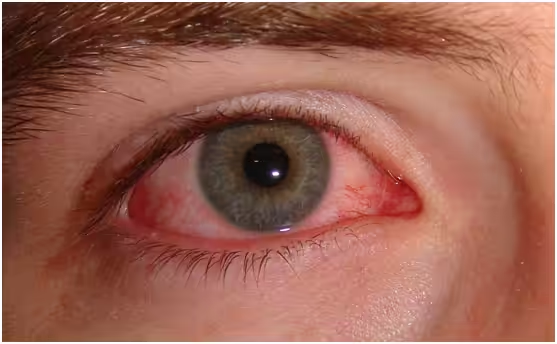
The main symptoms are intense redness, burning (a burning sensation in the eyes), tearing, itching, and primarily secretions. Depending on the cause of the inflammation, some of the above may be more pronounced while others may not be present at all.
Patients often use medications or other therapies to address it, which are not necessarily required and, on the contrary, may have completely opposite effects. Below we will examine a series of incorrect therapeutic approaches that produce anything but beneficial results.
The use of chamomile compresses
 In the past, when the availability and production of medications were limited, treatments using natural antiseptic products such as chamomile were the only option.
But is chamomile and other such “folk remedies” a good treatment? The answer is NO. Chamomile can act as a primary allergenic factor and complicate matters. It also requires great caution because microbes can grow and develop in chamomile compresses, turning a simple condition into a serious infection.
The use of lemon
 As strange as it may sound, many people use lemon drops in the eyes to treat various conditions. They believe that “good medicines sting, therefore they work.” Certainly, things are not like that. Lemon, which is highly acidic, can lead to serious permanent damage to the surface and, consequently, to vision.
Viral Conjunctivitis

It is very common and particularly persistent. It is caused by viruses. Usually, these are adenoviruses, which can cause an upper respiratory infection that may precede the ocular symptoms, occur simultaneously, or follow viral conjunctivitis.
Transmission is usually from one eye to the other as well as from the patient to their close contacts. Families with young school-aged and preschool children encounter such infections more frequently.
Viral Conjunctivitis – Symptoms
The sensation of a foreign body, pain, intense redness, and eyelid swelling are the symptoms of the disease.
The lymph nodes in front of the ear (preauricular) are often palpable.
The symptoms are quite severe, and the course of the disease is long (sometimes it can last up to a month). Viral conjunctivitis almost never causes permanent damage, nor does it threaten vision.
However, it can sometimes cause corneal clouding due to deposition of subepithelial immune complexes, which may affect visual acuity.
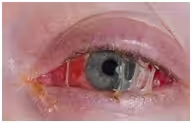
Rarely, pseudomembranes are observed, which bleed at the eyelid folds.
The above two complications of viral conjunctivitis should be treated with the topical use of corticosteroids.
Common mistakes…
It is very common for patients to use all kinds of eye drops for viral conjunctivitis.
The use of corticosteroids
The use of corticosteroids is only indicated for the two complications of the disease. On the contrary, corticosteroid therapy in the eye can, in many cases, cause significant problems. In simple viral conjunctivitis, for example, it increases the duration of the viral infection and the virus replication time. In other cases, such as with herpes viruses, it can create serious complications, including reactivation of the infection or even corneal ulcers.
The use of antibiotics
Similarly to the use of corticosteroids, many patients use particularly strong antibiotic eye drops for the treatment of viral conjunctivitis. As we said, this is a viral infection, so these drops will NOT help in its treatment. On the contrary, due to the toxicity of the preservatives in the drops, they can cause further irritation. The use of a mild antibiotic, such as preservative-free chloramphenicol, may help with any secondary bacterial infection.
Finally, we should all know that if antibiotics are not used properly, they can create resistant strains of microbes, which will be particularly difficult to treat in the future if necessary.
Bacterial Conjunctivitis
 It is more common in children due to their weaker immune systems. Many bacteria can cause it. The most common are Haemophilus influenzae and Staphylococcus aureus. Staphylococcus aureus can cause inflammation at the eyelash roots, known as blepharitis. Staphylococcus epidermidis presents a similar clinical picture, but generally, the inflammation is milder.
Such conjunctivitis is effectively treated with chloramphenicol eye drops.
Topical antibiotics in ointment or drop form and abundant artificial tears are the treatment. Bacterial conjunctivitis can be as contagious as viral conjunctivitis. Frequent handwashing, as well as adherence to basic hygiene rules, can prevent the transmission of the infection from the child to family members.
Bacterial Conjunctivitis – Symptoms
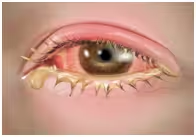 In bacterial conjunctivitis, there are intense mucopurulent secretions (eye crusts) that appear especially after sleep, the eyelashes are stuck together, and the eye is highly irritated. The eyelids are edematous (swollen), and there is also associated tearing.
Bacterial conjunctivitis in children
It is more common in our little friends due to insufficient hygiene (children often play with soil or dirt and rub their eyes without cleaning them). The immune system of children is also not fully developed, which helps bacteria to grow.
The symptoms are exactly the same as in adults.
Are bacteria transmissible?
YES!! This is why hygiene rules must be followed, such as having their own towel, pillow, etc. We should also advise the child not to rub their eyes because with their hands they can irritate them in the first place and also transfer the bacterial load to other people.
Allergic Conjunctivitis
Pollen, cosmetics, household detergents, various clothing materials, and pets are just a few members of the vast list of potential allergens.
Symptoms of allergic conjunctivitis
The main symptom is itching. Often, there may also be a sensation of a foreign body, photophobia, and secretions. The secretions here are filamentous (like small threads or hairs).
Seasonal Conjunctivitis
It is called this because it usually appears in spring and autumn. The main symptom here is also particularly intense itching. It can often affect the cornea, in which case it is called seasonal kerato-conjunctivitis.
Conjunctivitis with Giant Papillae
This is another form of conjunctivitis, which appears in CONTACT LENS users and subsides with discontinuation of their use. The most important aspect of treating any allergy, as well as allergic conjunctivitis, is the removal of the factor that causes it (allergen), thus… discontinuing the use of contact lenses.
Apart from this, there are several medications that can limit allergic episodes and make allergy symptoms milder. Mast cell stabilizers can improve or even control the onset of an allergy. These agents do not create toxicity on the surface of the eye and are safe. Classic antihistamines should NOT be used.
They are implicated in causing an allergic reaction in the eyelids and the conjunctiva. Newer antihistamines, such as olopatadine, have prolonged antihistamine action and are administered in allergic conjunctivitis of any etiology. In many cases, the use of steroids is necessary to suppress inflammation but should be as limited as possible.
General guidelines for conjunctivitis
When some of the above symptoms appear, we should consult our ophthalmologist.
In viral and bacterial forms, one should:
- Avoid the use of contact lenses.
- Disinfect the patient’s personal items.
- Avoid reusing tissues or towels.
- Avoid swimming (many microbes can be transmitted to others through water).
- Do not share personal items such as towels, pillows, etc.
- Avoid touching the face and rubbing the eyes.
Timely diagnosis and proper treatment will lead to a safe and quick resolution of the problem.