


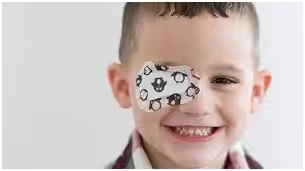
Amblyopia, commonly known as “lazy eye,” is the most frequent ophthalmic condition in childhood. It is a visual disorder in which the visual function has not developed properly. It usually concerns the visual stimuli of one eye, though both eyes can occasionally be affected.
Normal visual development occurs from birth up to around 9 years of age. For vision to develop correctly, the visual organs must function normally and receive proper visual stimuli to render them effective. The eyes send visual signals to the brain to train its visual centers. If the visual signals reaching the brain are inadequate, the visual centers do not learn to process clear images, and vision remains blurred. If the brain does not receive clear images from one eye to decode, analyze, and translate into visual information, it will not later be able to adapt to this complex task. If amblyopia is not detected at an early age, it becomes difficult to treat effectively later in life.
Strabismic Amblyopia: Caused by poor eye alignment (strabismus).
Deprivation Amblyopia: Caused by problems affecting the transmission of visual information.
Refractive Amblyopia: Caused by various refractive errors, such as high myopia, astigmatism, hyperopia, or anisometropia.
Strabismus
Anisometropia
Conditions that obstruct visual stimuli from entering the eye
The most common treatment for amblyopia is patching the stronger eye (in cases of strabismic amblyopia) to exercise the “lazy eye.” For children aged 3–7 years with mild amblyopia, two hours per day may be sufficient.
Each case is unique and requires an individualized approach. Regular follow-up with a clinical ophthalmologist is essential to ensure the effectiveness of the treatment.