

The decision to permanently get rid of glasses or contact lenses is one of the most important choices for improving your quality of life. Today, laser myopia is a completely safe, fast and painless procedure.
A common question I encounter every day in the office is: “Which method is best for my eyes? LASIK or PRK?”
As an Ophthalmic Surgeon with many years of experience in the United Kingdom, my goal is to completely personalize your treatment. Let’s take a closer look at what each method offers.
What is Refractive Surgery (Laser Myopia)?
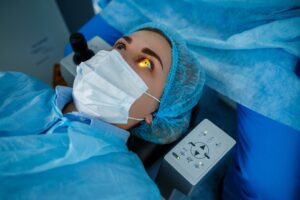
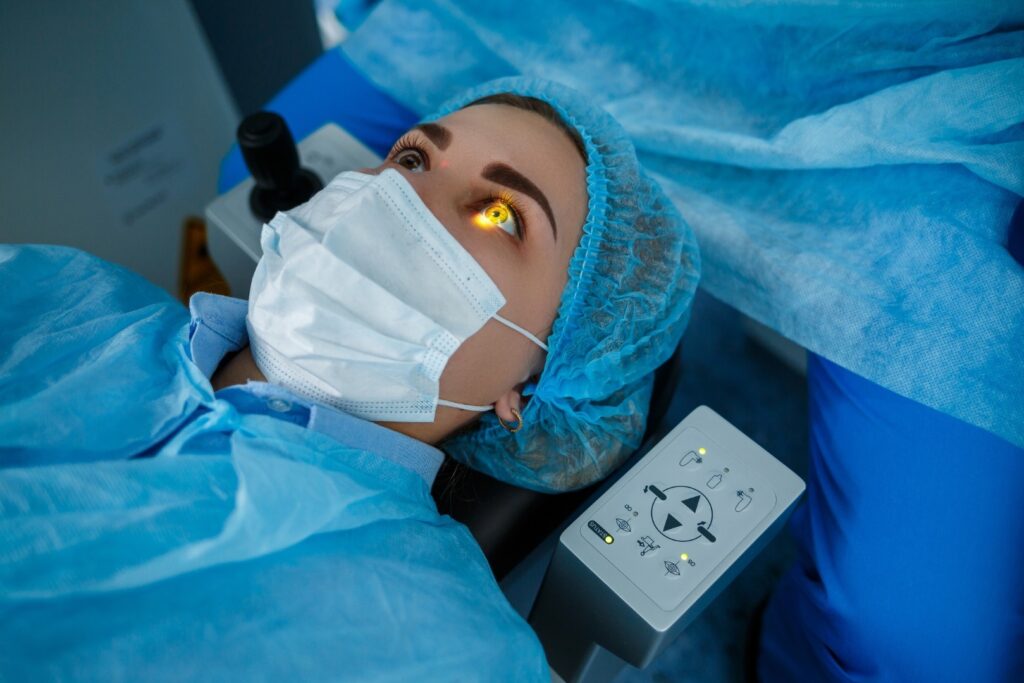
Refractive surgery uses advanced Excimer Laser technology to sculpt the cornea of the eye with absolute precision. Thus, refractive errors such as myopia, hyperopia and astigmatism are corrected, allowing light to focus correctly on the retina.
The two dominant methods worldwide are LASIK and PRK.
LASIK Method: Fast Recovery and Immediate Results
The LASIK (Laser-Assisted In Situ Keratomileusis) method is the most widely used technique worldwide.
How does it work?
The surgeon creates a very thin flap on the surface of the cornea. The flap is then lifted, allowing the laser to sculpt the interior of the cornea. Finally, the flap is repositioned in its natural position, where it functions as a “natural bandage”.
Advantages of LASIK:
– Painless procedure: The operation and the postoperative course are practically painless.
– Rapid restoration of vision: Most patients experience clear vision within 24 hours.
– Minimal discomfort: Discomforts, such as foreign body sensation or tearing, usually last only a few hours.
For whom is it contraindicated?
LASIK is not suitable for people with very thin corneas or with severe dry eyes, as well as for patients with old lesions or injuries to the cornea.
Another possible contraindication is pathological or suspicious corneal topography.
PRK Method: The Ideal Choice for Thin Corneas
The PRK (Photorefractive Keratectomy) method is the oldest technique, but it remains extremely reliable and necessary in certain cases.
How does it work?
In PRK, no flap is created. Instead, the surface layer of the cornea (epithelium) is completely removed and the laser is applied directly to its surface. For the following days, a therapeutic contact lens is applied until the epithelium regenerates.
Advantages of PRK:
– Suitable for all corneas: It is the solution of choice for patients with peculiarities or thin corneal thickness.
– Zero risk of flap complications: Ideal for people involved in contact sports (martial arts, etc.) or members of the security forces.
What you should know?
Recovery is more gradual. The patient may experience discomfort and photophobia in the first 2-3 days, while complete stabilization of vision can take from a few weeks to a few months.
LASIK or PRK: Which should I choose?
The answer is never general. The most appropriate method is determined exclusively and only after a thorough preoperative examination (corneal topography, pachymetry, funduscopy, etc.).
At Dr. Karydis’ Eye Center ophthalmology clinic in Kalamata, our priority is not just correcting your vision, but maximizing your safety. We invest in the most modern diagnostic equipment to offer you a personalized solution that fully respects the anatomy of your eye.
Book your Appointment in Kalamata
Don’t let myopia limit you. If you are in Kalamata, Sparta or the wider Peloponnese, trust your eye health in hands with international experience.
Contact us today for your complete pre-operative check-up and take the first step towards a life of crystal clear vision, without compromise.