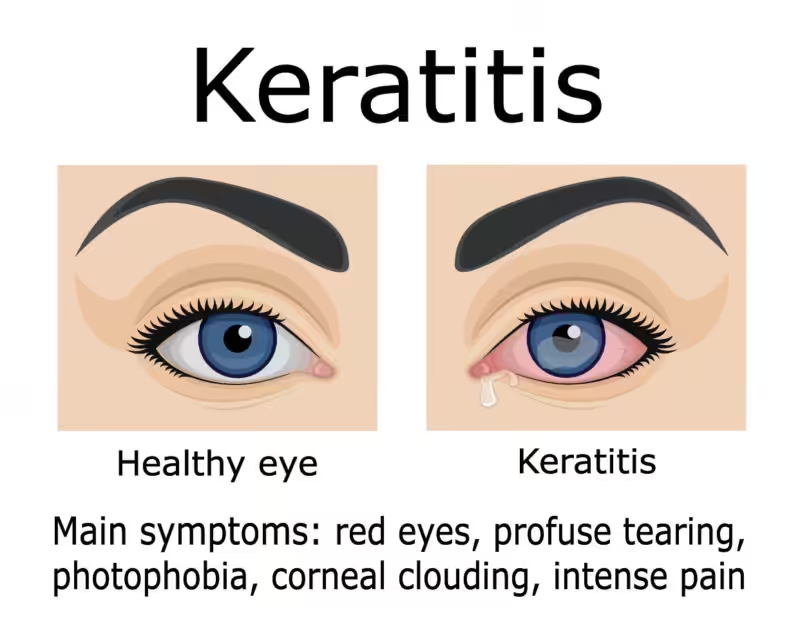
Keratitis is an inflammation that occurs in the cornea, the transparent layer at the front of the eye. Keratitis can result in a significant reduction of the patient’s vision. During the active inflammation of the cornea, and even after it subsides, gradual changes such as neovascularization, opacities, and other alterations may develop, potentially affecting its clarity.
Causes and forms of keratitis:
- Bacterial keratitis: This form of keratitis is usually caused by the invasion of certain microorganisms into the deeper layers of the cornea. This most often occurs when the corneal epithelium (the outer layer) is damaged or vulnerable due to severe dry eye, contact lens use, trauma, or other factors that disrupt its integrity.
- Acanthamoeba keratitis: This inflammation is typically seen in contact lens users who do not follow proper hygiene practices for lens handling and maintenance. The main causes of acanthamoeba keratitis are contaminated water or swimming while wearing contact lenses. Acanthamoeba is a microorganism that thrives in stagnant water (pools, lakes, contact lens solutions, etc.).
- Fungal keratitis: Fungal keratitis is most often the result of trauma (e.g., from a branch or tree leaves), infection during surgery, or in contact lens users. In fact, the material of soft contact lenses is considered an ideal environment for microorganism growth and proliferation.
- Adenoviral keratitis: Although less common, this form of keratitis occurs even though the conjunctiva is frequently affected by adenoviruses (viral conjunctivitis). It is characterized by white opacities in the corneal stroma, located beneath the epithelium (subepithelial), and leads to vision loss.
- Herpetic keratitis: A hallmark of this form is the presence of one or more dendritic ulcers on the corneal surface. It is primarily caused by the herpes zoster virus or herpes simplex virus. Occasionally, the virus creates small off-white foci in the cornea, and in some cases, patients may be asymptomatic. Uncontrolled use of corticosteroid eye drops in this type of keratitis is particularly dangerous, as it can worsen the condition and cause permanent damage.
- Non-infectious keratitis: Sometimes keratitis arises from non-infectious causes. These inflammations may result from corneal degenerations and dystrophies, medications, toxic agents, or neurotrophic reasons.
Some of the symptoms experienced by patients with keratitis include:
- Redness
- Mucopurulent discharge
- Foreign body sensation
- Severe pain
- Tearing
- Light sensitivity (photophobia)
- Headache
- Eyelid swelling
- Blurred vision
Each form of keratitis is treated individually, with a therapy specifically tailored to address it. Following a thorough diagnosis, the ophthalmologist prescribes the appropriate treatment, which may include antibiotic eye drops or ointments. Depending on the type of keratitis, the ophthalmologist may also consider taking a sample from the cornea for culture. During treatment, patients are prohibited from using contact lenses. It is recommended that contact lens users who develop these symptoms keep their old lenses, as they can provide valuable information about any microorganisms that may have grown on them (contact lens culture).