

Color blindness or achromatopsia is a disorder of color perception. It can be hereditary, meaning the patient is born with difficulty perceiving colors, or acquired, when the normal function of the optic nerve is affected.
Patients with color blindness are not considered blind, but they cannot distinguish certain colors, e.g., green from red or blue from yellow. Partial color blindness of red–green is the most common form, while inability to perceive blue–yellow is rarer.
Most people mistakenly believe that a patient with color blindness sees everything in shades of gray.

Causes of color blindness
Color blindness is often hereditary. This fairly common problem is due to the partial or complete absence of photoreceptors (cones). Photoreceptors are located at the back of the eye, specifically in the retina. These include rods and cones. Rods are responsible for light perception, while cones detect colors. The number of cones in a patient with color blindness determines the degree of color vision deficiency. Cones, which normally have high concentrations in the center of the retina, contain three light-sensitive pigments (photopigments): red, green, and blue. Patients with color blindness lack one or more of these pigments, or the cones containing them. For example, a patient who cannot distinguish green from red has a reduced population of green and red cones.
Types of color blindness
Color blindness can be complete, affecting all colors, or partial (dyschromatopsia), affecting certain colors. Complete color blindness is extremely rare and almost always accompanied by other eye abnormalities.
Patients with normal color perception are called trichromatic. When one of the pigments is missing, patients are called anomalous trichromats, the most common group among people with color blindness.

Symptoms
Symptoms are usually noticed by parents when the child cannot identify or describe a color correctly. Often, color blindness is diagnosed by a clinical ophthalmologist during an eye exam.
In more severe hereditary cases (extremely rare), the patient sees only in shades of gray (complete achromatopsia), experiences reduced visual acuity, and may have rapid involuntary eye movements (nystagmus).
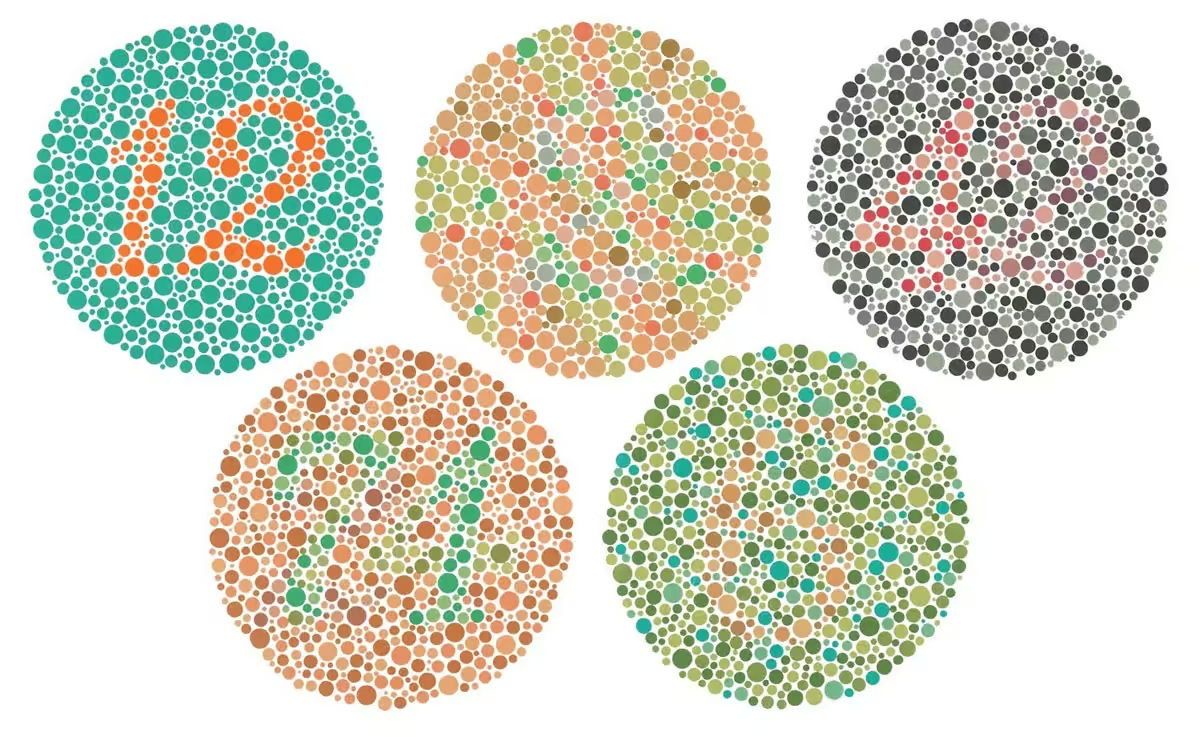
How is color blindness diagnosed?
During a routine eye examination, usually performed in preschool age, the ophthalmologist should detect the possibility of abnormal color perception in the child. This is done using special color charts (Ishihara charts). These charts display shapes or numbers formed by colored dots, which a trichromatic (normal) observer should be able to see.
Treatment
Color blindness is not treatable.

Diagnosis is extremely important because it will determine the development of a child with dyschromatopsia or color blindness and should be recorded in the patient’s medical file.
If a child is affected, parents should inform the school. Many preschool learning tools and games rely on colors, so education should be appropriately adapted.
Later in life, affected individuals may not be able to work in professions where color plays a critical role, such as aviation, maritime navigation, or operating machinery with red and green indicators.