

What is a stye?
A “stye” in the eye is nothing more than an infection caused by the bacterium Staphylococcus. Staphylococcus is a bacterium that, in most cases—among 29 other types of bacteria—lives and reproduces naturally on our skin without causing problems or complications for our health.
How does a stye look and where does it appear?
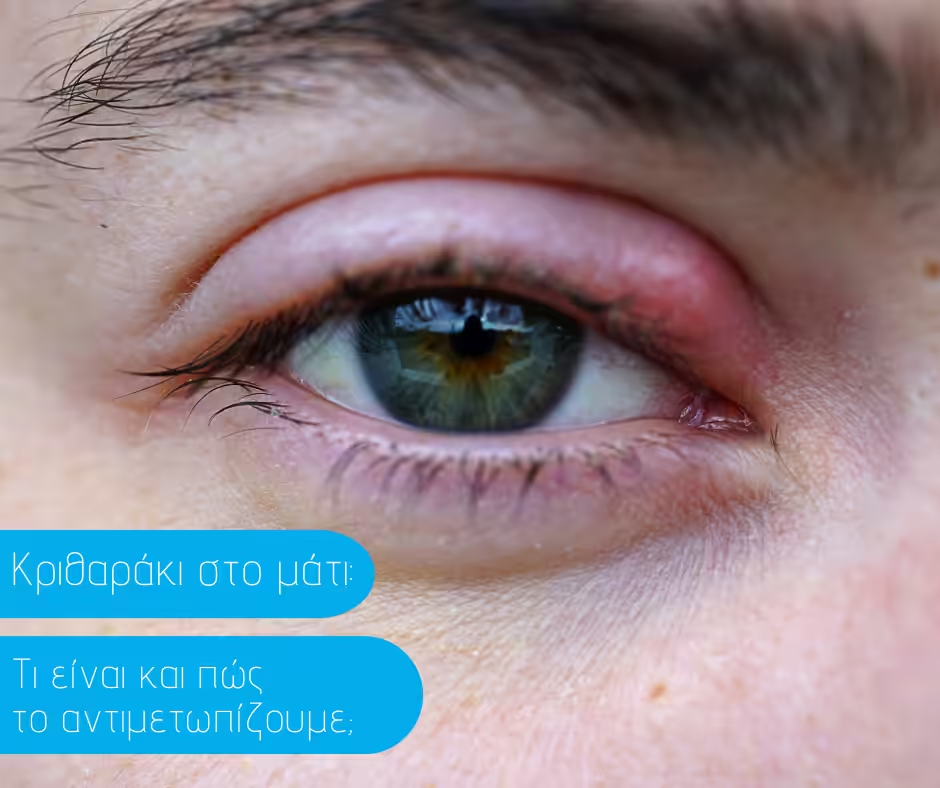
A stye looks much like a pimple. It is usually a small red bump that appears on the upper or lower eyelid. Whether it is internal or external depends on the underlying cause.
External & internal styes
In the case of an external stye, the cause is usually an acute purulent inflammation of the eyelash follicle, an infection of the sebaceous gland (the gland in the eyelash follicle that produces sebum to keep the eyelash moisturised), or an infection of the sweat gland (the gland that produces sweat near the follicle).
An internal stye is caused by an acute purulent inflammation of the Meibomian glands, glands that produce an oily substance which, together with other components, forms the tears.
Factors that can cause eyelid infection
A stye usually lasts about 1–2 weeks and then typically resolves on its own. The causes that often lead to this kind of infection are usually related to everyday (bad) habits:
- Inadequate removal of eye makeup
- Use of cosmetics that have passed their expiry date or are contaminated
- Various inflammatory eyelid conditions
- Hormonal disorders/changes
- And of course… increased stress!
Ways to treat a stye
Although a stye usually resolves on its own within one or two weeks, there are some ways to address swelling or pain in certain cases:
- You can use warm compresses to cover the eye for 10–15 minutes
- Clean your eyelids either with a mild soap (baby soap) and water or with special eyelid cleansing wipes available at a pharmacy.
If the pain does not subside, it is recommended to visit your ophthalmologist, who may be able to take certain measures to relieve you, such as prescribing an antibiotic ointment or performing a small incision to drain the stye.
Stye or chalazion?
These are two inflammations often confused. However, a chalazion is a cyst caused by a chronic granulomatous inflammation resulting from blockage of the gland openings and stagnation of their sebaceous secretions. Its appearance is not linked to any microorganism, unlike a stye. Nevertheless, care must be taken as it may become infected later on.
How can I prevent a stye from appearing?
Firstly, it is important to be aware of the factors that cause it, as mentioned above, and to take care of the hygiene of both your eyes and your hands. It is also wise not to share towels or other personal hygiene items, sunglasses, makeup products, etc., with others, as bacteria can be transferred. Protecting the eye from dust and sand, especially on windy days, is equally important. Finally, if you notice that you frequently develop eye infections, you should carefully and consistently clean the area with warm water and a clean towel whenever possible.