


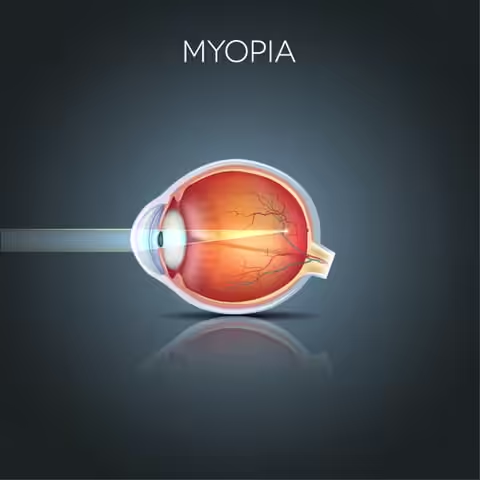
Myopia is a refractive error of the eye that makes distant vision difficult. In myopia, light rays from the external environment, as well as images of various objects, do not focus on the back of the eye (the retina), as happens in normal emmetropic eyes, but in front of it, resulting in blurred vision for distant objects.
What causes myopia? The main causes of myopia are:
Myopia usually appears in the final years of elementary school and stabilizes during adolescence, with minor increases up to around the age of 21.
How can myopia be managed? The main approaches are:
In degenerative myopia, in addition to blurred vision—which is the main characteristic of myopia as a refractive error—degenerative changes of the ocular coats may also appear. These changes are usually observed in myopia greater than 6.00 diopters, although there are cases where degenerative alterations are not related to the degree of myopia.
Individuals with degenerative myopia have a higher risk of retinal detachment. Approximately 5%–8% of retinal detachment cases occur in people with high myopia. Fundoscopic examination is essential for the prevention of such a condition.
Pregnancy is undoubtedly one of the most important periods in a woman’s life. During this nine-month journey, a woman will experience numerous changes in both her body and overall physiology. Often, hormonal fluctuations during pregnancy can lead to the onset of myopia or the worsening of pre-existing myopia. Possible effects also include changes in focus and accommodation. However, these symptoms are usually temporary, and vision typically returns to normal after childbirth. Therefore, ophthalmologic examination during pregnancy is essential as an important preventive measure, although many expectant mothers tend to avoid it.
It is also worth noting that women who wish to undergo refractive surgery with excimer laser to correct refractive errors such as myopia, hyperopia, or astigmatism should not schedule the procedure during pregnancy or breastfeeding. The main reason is that hormonal changes affect the cornea, making the refractive outcome unpredictable. Once the cornea has returned to its normal state after pregnancy and breastfeeding, the woman can proceed with the refractive surgery, provided that a preoperative refractive assessment has been conducted.