

Cataract surgery is considered one of the most successful and reliable surgical procedures. Vision restoration occurs in a very short period, and the results are often remarkable.
If you are experiencing blurred vision or difficulty in your daily life due to cataracts, don’t let the problem progress. The specialized team at Eye Center in Kalamata has many years of experience and advanced technology to successfully restore vision with safe and painless techniques.
Contact us today for a comprehensive assessment and personalized treatment plan.
Cataract Surgery and Improvement of Quality of Life
According to recent studies, it is evident that patients who underwent cataract surgery reduced their risk of being involved in a car accident by 50%.
Those who chose not to undergo surgery drove significantly less than those who had the procedure, covering approximately half the distance. This demonstrates that cataracts greatly limit a person’s mobility and daily life.
This limitation in driving—a skill typically required daily in modern life due to distances or work—significantly impacts a person’s quality of life, especially for those who wish to remain independent, capable, and active in their daily routines.
Despite the numerous benefits of cataract surgery, such as the ability to drive and perform daily activities, as well as improvements in psychological well-being, many patients hesitate or refuse to undergo the procedure.
This delay may be due to a lack of support from family, the need to manage other chronic conditions, or misconceptions about the surgery, its duration, and recovery time, with the belief that returning to daily life will require a long period after cataract surgery.
Nowadays, cataract surgery is performed painlessly without the need for hospital admission, and the patient is typically able to return to daily activities within a few days.
Cataract: What Is It?
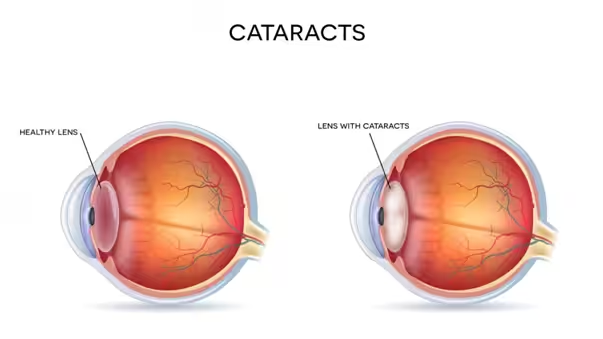
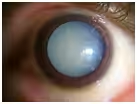
A cataract occurs when accumulated protein in the eye’s lens causes clouding, which impairs vision.
A cataract occurs when accumulated protein in the eye’s lens causes clouding, which impairs vision.
Essentially, it is the clouding of the natural lens of the eye. A healthy, normal lens is transparent, allowing light to pass through and reach the retina and macula to create normal vision.
Lens clouding can reduce vision, disrupt color contrast (making colors appear less vivid), and generally create difficulties for the patient in daily activities.
The more advanced the lens degeneration (clouding), the more impaired the vision and, consequently, the lower the patient’s quality of life.
Causes
- AGE
- Previous eye injury (traumatic cataract)
- Previous ocular inflammation
- Cataracts from metabolic conditions (diabetes, hypocalcemia syndrome, etc.)
- Toxic or pharmaceutical factors (use of corticosteroids, pilocarpine, cholesterol-lowering drugs, smoking, alcohol, hormone therapies, etc.)
- Secondary cataracts (from chronic iridocyclitis, acute glaucoma, high myopia, etc.)
- Congenital cataracts (from rubella, toxoplasmosis, etc.)
- Hereditary cataracts
- Early-onset cataracts in younger patients
- Ultraviolet radiation

The most common type is age-related cataract. Studies show that people aged 65–70 have a 50% prevalence, increasing to 70% in those over 75.
Lens clouding is the most frequent cause of vision impairment in people over 40.
Symptoms
One of the earliest symptoms is a rapid change in eyeglass prescription.
Difficulty reading, recognizing faces, watching television, and driving are common.
Central cataracts manifest as difficulty with bright light and relative myopia, which may improve near vision.
CATARACT PROGRESSION: Can It Be Prevented?
The exact cause of this degenerative condition is not fully known. However, its onset can be delayed by:
- Avoiding ultraviolet radiation
- Quitting smoking
- Controlling metabolic conditions such as diabetes
- Maintaining healthy dietary habits. A Mediterranean diet or a diet rich in vegetables may have beneficial effects.
When Should Cataract Surgery Be Performed?
When symptoms appear, new glasses may help temporarily for reading or distance vision, but as cataracts progress, prescriptions will frequently change.
Many patients mistakenly assume that vision loss is simply due to aging.
However, cataract surgery is a painless procedure that restores vision to normal pre-cataract levels. It is the most common and successful surgical procedure in the U.S., with over 3,000,000 patients undergoing cataract surgery annually.
A patient should undergo cataract surgery when they wish to improve visual acuity, enhance the quality of their vision, and return to pre-cataract activities.
With modern micro-surgical methods, surgery is recommended when cataracts reduce vision by approximately 50%. In cases of very advanced clouding and lens hardness, the surgery becomes more challenging, and intraoperative complications are more likely.
Therefore, if someone struggles to drive at night, read, or watch television, it may be the right time to consider cataract surgery.
Cataract Surgery
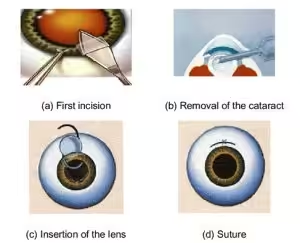
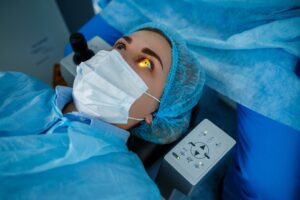
Surgery is the only way to treat a cataract. During the procedure, the cloudy, hardened lens is removed using phacoemulsification (lens fragmentation) and replaced with a permanent intraocular lens (IOL) through tiny incisions. The IOL remains in the eye for life.
Sometimes the natural lens capsule (posterior capsule) can become cloudy, causing cataract-like symptoms. In such cases, a single laser procedure is performed to clear the posterior lens capsule.
Frequently Asked Questions About Cataract Surgery
- Does the surgery require general or local anesthesia?
Cataract surgery with phacoemulsification does not require general anesthesia. Anesthesia is tailored to the patient’s level of cooperation and is completely painless, performed using local anesthetic drops or a local injection in more difficult cases.
- How long does cataract surgery take?
The actual surgical time is approximately 15–20 minutes. Preoperative assessment and anesthesiologist consultation are required. Post-surgery observation is also needed.
- Is the operated eye covered with gauze?
No, the eye is not covered with gauze. Patients may wear sunglasses and leave the clinic immediately.
- When will vision be clear after surgery?
Vision starts improving within hours, with stabilization occurring after approximately 20 days.
- What should be avoided post-surgery?
Patients should follow postoperative care instructions and avoid:
- Rubbing the operated eye
- Bending over for long periods
- Swimming or strenuous exercise
- Getting the eye wet
Intraocular Lenses (IOLs)
Aspheric (aberration-free) IOLs used in cataract surgery improve vision in different lighting conditions, enhancing night driving safety and confidence.
In a study conducted under night driving conditions, drivers with aspheric intraocular lenses were able to see pedestrians crossing a crosswalk faster compared to drivers with conventional lenses.
Consequently, they had the advantage of recognizing a pedestrian from a distance and braking 13.5 meters away when their average speed was 60 km/h—0.5 seconds faster than drivers with conventional lenses.
Aspheric IOLs provide 31% better contrast in normal light and 53% better contrast in low light compared to conventional lenses.
Which is the most suitable intraocular lens for each case?
- Monofocal intraocular lens
This is a lens that can correct distance vision. The patient will need glasses for near vision after the surgery.
- Toric intraocular lens (astigmatism-correcting lens)
These lenses correct astigmatism. After the surgery, the patient will be able to see very clearly at a distance without the use of auxiliary glasses, but will still need glasses for reading.
- Multifocal intraocular lens
These lenses significantly reduce the need for glasses. The main feature of this lens is that it provides dual focus (near and far). The patient will no longer need auxiliary glasses for reading and distance vision. These lenses, however, cannot cover intermediate distances (such as viewing a computer screen).
- Trifocal intraocular lens
It has the same properties as a multifocal lens. Its advantage is that it can also cover intermediate distances, such as computer use.
- Multifocal toric intraocular lens
These lenses reduce the need for glasses. In addition to restoring near and distance vision, this lens also corrects astigmatism, allowing the patient to achieve higher-quality vision postoperatively.
Will Glasses Be Needed After Surgery?
Some patients may still need glasses, but with proper preoperative assessment and appropriate IOL selection, the need is minimized.
Can Cataracts Recur?
NO, because the natural lens is removed.
Cataract Surgery Instructions
On the Day of Surgery
The patient should inform the surgeon of any changes in their general treatment before the surgery.
Due to the avoidance of water around the head for several days after the surgery, the patient should have taken care of personal hygiene in the days prior.
Clean your face and eyelids of any makeup 2–3 days before the procedure using a facial cleansing soap specifically for the face.
- Solid foods should be avoided for at least 12 hours before the surgery, as well as liquids such as milk, cream, orange juice, etc.
- Two hours before surgery, the patient may drink clear liquids such as coffee or tea; however, dairy products are prohibited.
- Take your medications as usual before the surgery, with the exception of insulin, which will be administered after the procedure.
Valuable items, personal jewelry, and watches should remain at home.
Before the Surgery
For safety reasons, the anesthesiologist will take a brief medical history before the procedure. The anesthesiologist’s assistant will place an intravenous catheter in the patient’s hand, which will be used in case of emergency and for possible sedation if there is significant stress.
During the Surgery
Your face will be covered with a sterile surgical drape, and a special eyelid speculum will be placed on the eye being operated on to prevent blinking during the procedure. After the surgery, you will lie down in your room for 30 minutes, where you will receive postoperative instructions and something to eat and drink.
First Hours After Surgery
After the procedure, you may watch television or even read, if it is comfortable and causes no problem. Resume your normal diet from the very first day.
Postoperative Eye Drops
From the first hours after the surgery, the patient should begin using the prescribed eye drops. They should be used according to your doctor’s instructions. When instilling drops, the patient should avoid touching the upper eyelid and only touch the lower eyelid, placing the drops in the lower conjunctival sac. If two drops need to be applied at the same time, leave a 3–5 minute interval between them.
If you are a glaucoma patient, continue your other treatments as instructed by your doctor.
What to Avoid During the First 10–14 Days
Cataract surgery is performed using micro-incisions. Healing and closure of the incisions occur without sutures, so the patient should take the following precautions during recovery:
Do not lift heavy objects.
Do not wet the operated eye.
Avoid deep bending.
Blurred vision, tearing, and often a sensation of a foreign body in the operated eye are normal during the first postoperative day.
After the Second Week
Healing is theoretically complete after the second week. At that time, a follow-up examination will be performed, and new glasses will be prescribed if needed.
When to Be Concerned
Pain in the operated eye, persistent blurred vision that does not improve, or irritation with purulent discharge are symptoms that require immediate examination. If you notice any of these, or experience intense flashes or a veil covering your vision, contact your ophthalmologist immediately.