


What is glaucoma?
Glaucoma is a very serious disease. Every year, 1.1 million people worldwide are driven to blindness. It is an irreversible eye condition which, in its early stages, is usually asymptomatic, and can even lead to total blindness if not treated promptly.
In glaucoma, the optic nerve (the nerve that connects the eye to the brain) is damaged. The most common cause is high intraocular pressure (pressure inside the eye).
Causes of glaucoma
The main cause of glaucoma, as mentioned above, is the increase of eye pressure. This occurs when there is an inability to properly drain the aqueous humor (the fluid produced inside the eye). Prolonged exposure of the optic nerve to intraocular pressure can lead to the destruction of its nerve fibers. It should be made clear that increased intraocular pressure does not always mean glaucoma. This condition is known as ocular hypertension.
Predisposing factors
- Age (aging)
- Black race
- Heredity
- High myopia
- Diabetes mellitus
- Hypertension
- Eye injury
- Long-term corticosteroid use
Types of glaucoma
-
Open-angle glaucoma
This is the most common and insidious form of glaucoma, as it is completely asymptomatic. This resistance to outflow is the cause of increased intraocular pressure, which in turn damages the optic nerve.
- Closed-angle glaucoma (acute glaucoma)
It is accompanied by nausea and vomiting or severe headache. It is an ophthalmic emergency and must be treated as soon as possible.
- Subacute closed-angle glaucoma
In this case, the patient suffers from transient closed-angle attacks which may often go unnoticed. The iris mechanically blocks the natural drainage of the anterior chamber (mainly when it dilates), and the resulting waves of increased pressure gradually destroy the optic nerve. Very often, these patients feel intense pain, especially in dim light, or see halos around light sources.
- Congenital glaucoma
Occurs in 1:10,000 births. It usually appears in early childhood or infancy (first 4 years of life).
- Normal-tension glaucoma
In some patients, the disease occurs while intraocular pressure is normal or even low.
Glaucoma treatment
Our main goal is to reduce the primary modifiable risk factor: intraocular pressure.
Intraocular pressure can be managed in two main ways:
- Reducing the production of aqueous humor
- Increasing its drainage
This can be achieved through the administration of medications (eye drops, pills, or injections).
In addition to conventional medications, there are other NEW METHODS to regulate intraocular pressure.
SLT – Selective Laser Trabeculoplasty
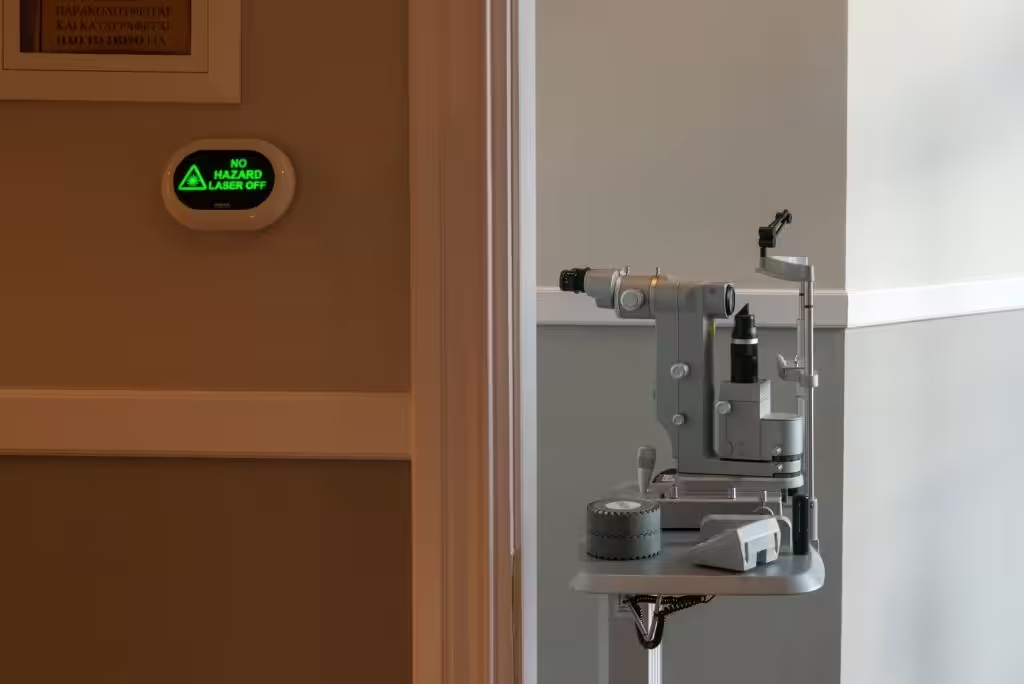
SLT stands for Selective Laser Trabeculoplasty. It is a simple yet highly effective laser procedure to reduce intraocular pressure. The procedure is performed in the ophthalmologist’s office and usually does not take more than five minutes.
- How it works
SLT activates a natural healing response in the body. The laser treatment uses short, low-energy light pulses targeting melanin or pigment in specific eye cells. As a response, the body’s natural mechanisms begin rebuilding these cells. Through this process, drainage improves and intraocular pressure is reduced.
- Does it cause pain?
SLT is painless and does not cause concerning side effects.
- What happens during the procedure?
The SLT treatment lasts only a few minutes. Before the procedure, the ophthalmologist administers drops to prepare the eye and ensure mild anesthesia. Then, gentle laser pulses are applied using a specially designed microscope called a slit lamp. The whole procedure takes only a few minutes. At the end, the ophthalmologist may administer eye drops to manage inflammation. Within one to three days after the procedure, your intraocular pressure will be significantly reduced. Naturally, the ophthalmologist will monitor the eye with periodic follow-ups at the office.
- Who benefits from SLT?
Patients who benefit from SLT include:
- Those with primary open-angle glaucoma, pseudoexfoliation, or pigmentary glaucoma
- Those intolerant of glaucoma medications or having difficulty using them as instructed
- Those already on glaucoma medications who wish to combine treatment with SLT
- Those who find it difficult to commit to regular treatments due to financial, transportation, or other limitations
- Those with a history of failed ALT (argon laser trabeculoplasty) treatments
SLT is therefore an excellent solution for patients with open-angle glaucoma or ocular hypertension who are dissatisfied with their current treatment effectiveness or whose quality of life is affected by eye drop usage.
The SLT laser from Ellex is a treatment that Eye Center has pioneeringly introduced in Messinia.
Glaucoma – new treatment: SLT laser